Climate change is no longer a distant problem. Around the world people have began to suffer from the effects of climate change. Communities are now dealing with more frequent heat waves, flooding, droughts and wildfires. The impacts of climate change are hitting the worlds most vulnerable groups the hardest. As these impacts become more severe, governments must decide not only how to adapt, but how to do so fairly.
What is climate adaptation?
Climate adaption refers to the actions taken to reduce the impacts of climate change on people, communities, human-systems and ecosystems.
Examples of climate adaptation include:
- Migration
- Making homes and infrastructure more resilient to extreme heat and weather
- Protecting water supplies and food systems
- Improving flood defences
- Strengthening healthcare systems for climate-related illness
However, climate change does not affect everyone equally. Older people, low-income households, disabled people and marginalised communities often face greater risks from climate change and fewer opportunities to adapt. This raises an important question – What makes climate adaptation just?
Climate justice is a form of environmental justice that looks at how to both adapt to and mitigate climate change fairly. One of the key questions of climate justice is asking how vulnerable groups can be protected and supported through the effects of climate change.
What is a citizens’ assembly?
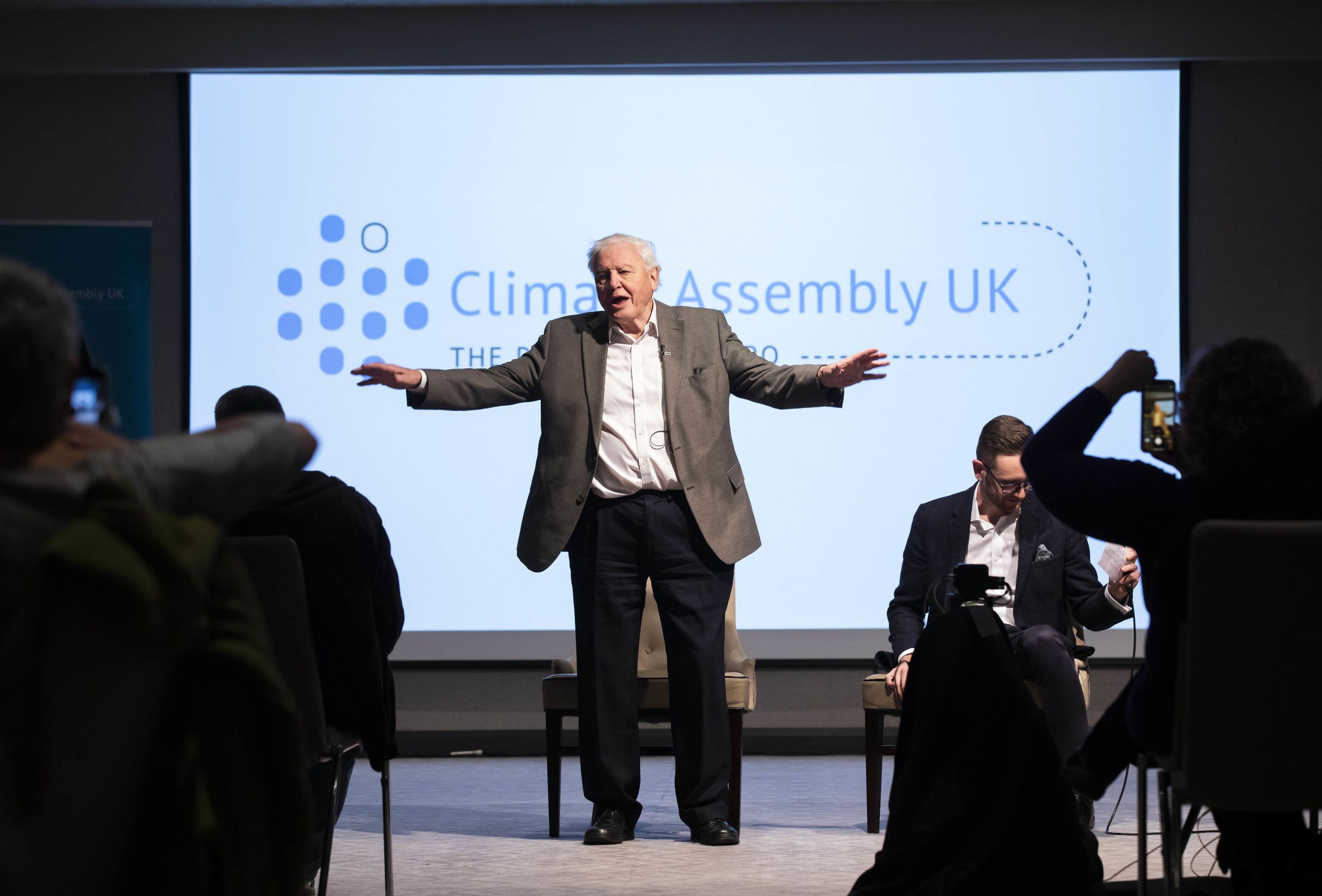
A citizens’ assembly is form of deliberative democracy that is rapidly growing in popularity as a tool to create citizen-led political policy. Participants are selected by civic lottery and hear evidence from experts, discuss complex issues together and produce recommendations for policymakers. Assemblies are designed to improve public participation, strengthen democratic legitimacy and bring diverse perspectives into policymaking. In recent years, governments in Europe have increasingly used citizens’ assemblies to discuss climate policy.
Most research evaluates these assemblies by asking questions such as:
- Were participants representative?
- Was everyone able to contribute?
- Was the deliberation respectful and informed?
These questions are important, but they do not tell us whether the policies recommended by the assembly actually contribute to just climate adaptation.
My research
My dissertation asks “Can citizens’ assemblies deliver just climate adaptation policy?“
Rather than looking only at whether the democratic process is fair, I also examine whether the recommendations produced by an assembly would improve people’s real opportunities to adapt to climate change.
To answer this question, I combine two different ideas of justice.
Procedural justice
Is political participation and decision making fair, inclusive and representative?
Capability-based justice
Does policy expand the real opportunities people have to live healthy, secure and meaningful lives? The Capability Approach argues that justice should not be judged simply by the resources people receive.
My research therefore asks whether adaptation policies expand people’s opportunities to live safely and adapt successfully to climate change.
Why does this research matter?
Citizens’ assemblies have generated significant enthusiasm, but success should not be measured solely by whether discussions are inclusive or well organised. A democratically successful process should also produce adaptation policies that are fairer and more inclusive.
My project argues that evaluating both the fairness of process and the justice of the outcomes provides a more complete picture of whether citizens’ assemblies can contribute to fair and effective climate adaptation.
Looking ahead
Climate adaptation will very likely shape many of the political decisions made over the coming decades. It is crucial that these decisions are both truly democratic and just.
By combining procedural justice with the Capability Approach, my research aims to develop a framework that helps policymakers, researchers and citizens evaluate whether democratic innovations such as citizens’ assemblies are delivering adaptation policies that genuinely improve vulnerable people’s lives.
 Adaptation Insights